Monday, January 9, 2012
How To Create A Bass Line In Your Left Hand
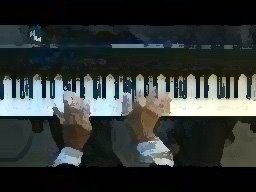
Here is a youtube video that gives you an example of creating a bass line in your left hand. The example used in this video focuses on approaching chord tones from a half-step below.
Labels:
7th Chords,
Bass Lines,
Left Hand Patterns
| Reactions: |
Friday, April 22, 2011
Piano Lessons: Tip 2:
Chord Voicings: Chords For A Better Sound
http://www.easypiano.com
http://twitter.com/easypiano
In this Free Piano Lesson for beginners to intermediates, you will learn how to take a chord and split it between hands to get the same sounds professional musicians get.
You will be introduced to the concept of Chord Voicings.
This is a preview of the concept taught in my Chord Voicings, Phase II program. http://bit.ly/gsnIle
Everything is kept easy so it will be fun to learn
http://twitter.com/easypiano
In this Free Piano Lesson for beginners to intermediates, you will learn how to take a chord and split it between hands to get the same sounds professional musicians get.
You will be introduced to the concept of Chord Voicings.
This is a preview of the concept taught in my Chord Voicings, Phase II program. http://bit.ly/gsnIle
Everything is kept easy so it will be fun to learn
| Reactions: |
Piano Lesson Tip 1:
Basic Left Hand Chord Pattern Lesson For Beginners
http://www.easypiano.com
http://twitter.com/easypiano
In this Free Piano Lesson for beginners, Piano Teacher, Charley Wyser will teach you a simple pattern you can play in your left hand on a Major or minor chord.
You will learn what notes to play, and what rhythms to use.
Everything is kept easy so it will be fun to learn
http://twitter.com/easypiano
In this Free Piano Lesson for beginners, Piano Teacher, Charley Wyser will teach you a simple pattern you can play in your left hand on a Major or minor chord.
You will learn what notes to play, and what rhythms to use.
Everything is kept easy so it will be fun to learn
| Reactions: |
Monday, February 9, 2009
How To Get A More Interesting Sound From Your Chords
by Charley Wyser
When you listen to professional musicians play, you may notice that their chords sound different from the way you are first taught to play chords.
Why is this?
Why is this?
Many professionals have learned to use voicings. What is a voicing?
This is when you rearrange the notes of the chords you play, usually between hands.
Let's take a simple C chord. The notes in a C chord are C, E, and G - 1, 3, and 5, of the C Major scale.
To make things easier, we are going to use the intervals (tones on the Major scale) to refer to voicing the chord.
Let's open up the sound of this chord by playing two of the three notes in the left hand, and the other note in the right hand.
Let's refer to this as the 1 - 5 - 3 voicing.
In other words, the left hand will play the 1 and 5 (C and G), and the right hand will play the 3 in the next register higher.

When you get a minute, try playing a regular C chord in root position (C, E, G), and then try playing this 1 - 5 - 3 voicing of the C chord on the piano.
You will notice the 1 - 5 - 3 has a more "open" sound. It does not sound as crowded. Personally, I prefer this sound.
Now, try this with the C minor, C Augmented, and C diminished chords.
C minor: 1 - 5 - b3 voicing

C Augmented: 1 - #5 - 3 voicing

C diminished: 1 - b5 - b3

You can see that these chords are now sounding more interesting.
This is how professionals play their chords.
We used 3 note chords for our examples in this lesson. But, you will usually apply this voicing concept to chords consisting of 4 or more notes.
The secret is remembering which numbers on the scale (intervals) the chord you are trying to voice is based on.
Experiment with this a little bit so you can understand the concept.
To learn how to play the 1-5-3 voicing in all twelve keys and apply to songs, take a look at my program called "Chord Voicings - Phase I".
Until next time, continue to have fun on your piano adventures.
Charley Wyser
easypiano.com
To view Free Online Lessons, click here
This is when you rearrange the notes of the chords you play, usually between hands.
Let's take a simple C chord. The notes in a C chord are C, E, and G - 1, 3, and 5, of the C Major scale.
To make things easier, we are going to use the intervals (tones on the Major scale) to refer to voicing the chord.
Let's open up the sound of this chord by playing two of the three notes in the left hand, and the other note in the right hand.
Let's refer to this as the 1 - 5 - 3 voicing.
In other words, the left hand will play the 1 and 5 (C and G), and the right hand will play the 3 in the next register higher.

When you get a minute, try playing a regular C chord in root position (C, E, G), and then try playing this 1 - 5 - 3 voicing of the C chord on the piano.
You will notice the 1 - 5 - 3 has a more "open" sound. It does not sound as crowded. Personally, I prefer this sound.
Now, try this with the C minor, C Augmented, and C diminished chords.
C minor: 1 - 5 - b3 voicing

C Augmented: 1 - #5 - 3 voicing

C diminished: 1 - b5 - b3

You can see that these chords are now sounding more interesting.
This is how professionals play their chords.
We used 3 note chords for our examples in this lesson. But, you will usually apply this voicing concept to chords consisting of 4 or more notes.
The secret is remembering which numbers on the scale (intervals) the chord you are trying to voice is based on.
Experiment with this a little bit so you can understand the concept.
To learn how to play the 1-5-3 voicing in all twelve keys and apply to songs, take a look at my program called "Chord Voicings - Phase I".
Until next time, continue to have fun on your piano adventures.
Charley Wyser
easypiano.com
To view Free Online Lessons, click here
| Reactions: |
Monday, February 2, 2009
What's The Difference Between a Dominant 7th, a 7th Chord and a Major 7th Chord
by Charley Wyser
The other day, I received an email from someone looking at my video lesson on learning a Simple Blues Lick in the key of F.
They really enjoyed the video, but were confused because they did not know the difference between a Dominant 7th, a 7th chord, and a Major 7th chord.
Since the blues lick is in the key of F, let me explain it in this key.
First, lets go through the notes of the F Major Scale and number the tones.
F(1) - G(2) - A(3) - Bb(4) - C(5) - D(6) - E(7) - F(1)
To form an F Major 7 chord, play the tones 1 - 3 - 5 - 7 (F, A, C, E). When you play these notes, you are playing a Major 7th chord because you are playing an F Major chord (1, 3, 5), and you are putting the 7th tone of the scale (Major 7th) at the top of the Major chord.
This chord is now called a Major 7th chords since it contains 1 - 3 - 5 - 7.
To form an F Dominant 7th chord, we can take this same Major 7th chord (1, 3, 5, 7) and flat the 7th tone of the scale. In other words, we can play F, A, C, and Eb.
We have an Eb in this chord because we have flatted the 7th tone. That is, instead of playing E, we now play Eb.
This Eb is the difference between the F Major 7th and the F Dominant 7th chord.
So the tones for the Dominant 7th chord are 1 - 3 - 5 - b7.
What about the difference between the F Dominant 7th, and the F7 chords.
Well, this one is very easy to answer.
You see, there is no difference. They are one and the same.
The formal name of the chord is the F Dominant 7th chord. The informal, or abbreviated name is F7.
So when you see the chord, F7, you still play 1 - 3 - 5 - b7 tones of the Major scale.
Well, that's it for now.
Continue to have fun on your piano adventures!
Charley Wyser
easypiano.com
To view Free Online lessons, click here
The other day, I received an email from someone looking at my video lesson on learning a Simple Blues Lick in the key of F.
They really enjoyed the video, but were confused because they did not know the difference between a Dominant 7th, a 7th chord, and a Major 7th chord.
Since the blues lick is in the key of F, let me explain it in this key.
First, lets go through the notes of the F Major Scale and number the tones.
F(1) - G(2) - A(3) - Bb(4) - C(5) - D(6) - E(7) - F(1)
To form an F Major 7 chord, play the tones 1 - 3 - 5 - 7 (F, A, C, E). When you play these notes, you are playing a Major 7th chord because you are playing an F Major chord (1, 3, 5), and you are putting the 7th tone of the scale (Major 7th) at the top of the Major chord.
This chord is now called a Major 7th chords since it contains 1 - 3 - 5 - 7.
To form an F Dominant 7th chord, we can take this same Major 7th chord (1, 3, 5, 7) and flat the 7th tone of the scale. In other words, we can play F, A, C, and Eb.
We have an Eb in this chord because we have flatted the 7th tone. That is, instead of playing E, we now play Eb.
This Eb is the difference between the F Major 7th and the F Dominant 7th chord.
So the tones for the Dominant 7th chord are 1 - 3 - 5 - b7.
What about the difference between the F Dominant 7th, and the F7 chords.
Well, this one is very easy to answer.
You see, there is no difference. They are one and the same.
The formal name of the chord is the F Dominant 7th chord. The informal, or abbreviated name is F7.
So when you see the chord, F7, you still play 1 - 3 - 5 - b7 tones of the Major scale.
Well, that's it for now.
Continue to have fun on your piano adventures!
Charley Wyser
easypiano.com
To view Free Online lessons, click here
Labels:
7th Chords,
Beginners Piano Lessons,
Dominant 7 chord,
Learning Chords,
Major 7 chord,
Major Scale,
Major Scales,
More Advanced Chords
| Reactions: |
Tuesday, January 27, 2009
How To Form More Advanced Chords Using The Numbers 1 - 7
by Charley Wyser
From a previous post, we learned to form our 4 basic chords - the Major, minor, Augmented and diminished in the key of C.
1)To form a C Major chord (C chord) we play the notes
1 - 3 - 5 (C E G).
2)To play a C minor chord, we play
1 - b3 - 5 (C Eb G)
3)To play a C Augmented chord, we play
1 - 3 - #5 (C E G#)
4)To play a C diminished chord, we play
1 - b3 - b5
For the more advanced chords, I will give you a chart. If you wish,
print out the chart and keep it near you piano or keyboard for
reference.
I am going to introduce a new term to you - "Intervals".
The intervals mean the note numbers in the scale.
Again, we will apply these numbers to the key of C.
Chord -> Interval -> Key of C example
C Major 7 -> 1 - 3 - 5 - 7 -> C - E - G - B
C Dominant 7 -> 1 - 3 - 5 - b7 -> C - E - G - Bb
C Minor 7 -> 1 - b3 - 5 - b7 -> C - Eb - G - Bb
C Minor 7b5 -> 1 - b3 - b5 - b7 -> C - Eb - Gb - Bb
C Diminished 7 -> 1 - b3 - b5 -bb7 -> C - Eb - Gbb -Bbb(A)
You will notice on the Diminished 7 chord there is a Bbb.
This is called a double-flat. This is actually the same as the 6 in
the C scale.
So another way of thinking of the Diminished 7 chord is to play
1 - b3 - b5 - 6
But you would not teach it this way, because technically this is
incorrectly stated.
One interesting thing to note is that each of these four note chords is based on one of
the four basic chords.
The Major 7th and Dominant 7th chords are both based on the Major chord. If you look
closely at the intervals, you will notice that both of these chords contain the
numbers 1 - 3 - 5 (Major chord).
Similarly, you will notice that the Minor 7th chord contains 1 - b3 - 5 (minor chord).
Lastly, both the Minor 7b5 (also called a Half-Diminished 7th), and the Diminished 7th are
both formed from the diminished chord because they contain 1 - b3 - b5.
The top note (7th tone) is going to be what differentiates the more advanced four-note chords
from their basic root chords (Major, minor, Augmented, diminished).
If you are interested in finding out more about chords and how they move, be sure to look at
my program, The Secret 7 Numbers of Successful Piano Playing.
As they say, "A Picture Is Worth A Thousand Words".
Until then, Keep Having Fun!
Charley Wyser
easypiano.com
To view my Free online lessons, click here
To listen to podcasts, click here
| Reactions: |
Thursday, January 22, 2009
How To Form Basic Chords
by Charley Wyser
There are four chords that are the basic foundation for almost all chords in music as played in the United States and other parts of the world.
Each of these chords consists of three notes. These four chords are the Major, minor, Augmented, and diminished chords.
In this article, you will learn about these chords in the key of C.
You will notice when the four chords were mentioned above, Major and Augmented begin with upper-case letters, and minor and diminished begin with lower-case letters. This is because chords that are Major, or formed from the Major chord start with an upper-case letter, and chords that are minor, or formed from the minor chord are in lower-case.
You will see how this works in just a few minutes.
To begin, let's start by forming a C Major scale.
Think about your younger school days when you learned Do - Re - Mi - Fa - So - La - Ti - Do.
When you sang this, you were singing a Major scale.
The notes that make up the C Major scale are in the picture below.
What I have done is numbered the tones in the C Major scale from 1 to 7. Many times, you will hear teachers refer to a Major scale as having eight tones. But, if you look closely at the eighth tone, you will notice that it is the same as the first tone.
Therefore, we will re-label it as tone number one.
These tones are going to be important in the formation of our four basic chords.
(the symbol 'b' is a flat. Eb is the same as E flat.)
1) Major chord: 1 - 3 - 5 -> C Major chord = C, E, G
2) minor chord: 1 - b3 - 5 - > C minor chord = C, Eb, G
3) Augmented chord: 1 - 3 - #5 -> C Augmented chord = C, E, G#
4) diminished chord: 1 - b3 - b5 -> C diminished chord = C, Eb, Gb
If you look at the above chart, you will start to see relationships between the four chords. Pay close attention to the 3rd.
In the Major, and Augmented chords, you will see that they both start with the 1 (referred to as the root of the chord), and the 3. This is why they are related. The only thing that changes is the treatment of the 5.
You will notice a similar relationship with the minor and diminished chords. The 3 is now flatted (b3). That is, both the minor and diminished chord begin with the root and the flat 3. Again, this is why they are related.
We covered these four basic chords in the key of C. Remember, in music, you should become familiar with these chords in all twelve keys. Becoming familiar with these chords will carry you a long way in your musical endeavors.
In my program, 4 Chords You Need To Know, you will learn these chords in all twelve keys. You will also learn how to apply them to songs, and learn shortcuts for figuring out any of these chords in matter of seconds in any key (even if you have never played them in that key before).
Until next time, continue to have fun on your piano journey!
Charley Wyser
www.easypiano.com
To view my free online lessons, click here
To listen to podcasts, click here
Each of these chords consists of three notes. These four chords are the Major, minor, Augmented, and diminished chords.
In this article, you will learn about these chords in the key of C.
You will notice when the four chords were mentioned above, Major and Augmented begin with upper-case letters, and minor and diminished begin with lower-case letters. This is because chords that are Major, or formed from the Major chord start with an upper-case letter, and chords that are minor, or formed from the minor chord are in lower-case.
You will see how this works in just a few minutes.
To begin, let's start by forming a C Major scale.
Think about your younger school days when you learned Do - Re - Mi - Fa - So - La - Ti - Do.
When you sang this, you were singing a Major scale.
The notes that make up the C Major scale are in the picture below.
What I have done is numbered the tones in the C Major scale from 1 to 7. Many times, you will hear teachers refer to a Major scale as having eight tones. But, if you look closely at the eighth tone, you will notice that it is the same as the first tone.Therefore, we will re-label it as tone number one.
These tones are going to be important in the formation of our four basic chords.
(the symbol 'b' is a flat. Eb is the same as E flat.)
1) Major chord: 1 - 3 - 5 -> C Major chord = C, E, G
2) minor chord: 1 - b3 - 5 - > C minor chord = C, Eb, G
3) Augmented chord: 1 - 3 - #5 -> C Augmented chord = C, E, G#
4) diminished chord: 1 - b3 - b5 -> C diminished chord = C, Eb, Gb
If you look at the above chart, you will start to see relationships between the four chords. Pay close attention to the 3rd.
In the Major, and Augmented chords, you will see that they both start with the 1 (referred to as the root of the chord), and the 3. This is why they are related. The only thing that changes is the treatment of the 5.
You will notice a similar relationship with the minor and diminished chords. The 3 is now flatted (b3). That is, both the minor and diminished chord begin with the root and the flat 3. Again, this is why they are related.
We covered these four basic chords in the key of C. Remember, in music, you should become familiar with these chords in all twelve keys. Becoming familiar with these chords will carry you a long way in your musical endeavors.
In my program, 4 Chords You Need To Know, you will learn these chords in all twelve keys. You will also learn how to apply them to songs, and learn shortcuts for figuring out any of these chords in matter of seconds in any key (even if you have never played them in that key before).
Until next time, continue to have fun on your piano journey!
Charley Wyser
www.easypiano.com
To view my free online lessons, click here
To listen to podcasts, click here
| Reactions: |
Subscribe to:
Posts (Atom)