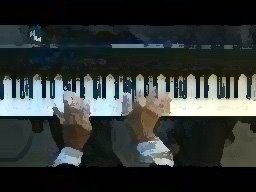
For many, you want to learn how to play piano or improve your playing, but do not have a lot of spare time for practicing. Or at least so you think.
According to some experts, if you take 24 hours a day and multiply that by 7 days a week, you have 168 hours of time each week. If you subtract a 40 hour work week and 56 hours a week of sleeping, there are still 72 hours a week left for other things.
This leaves us approximately 10 hours a day to do our other duties. This is of course purely theoretical. As I am sure you are aware of, most things in theory do not work the same way in reality.
So, the question becomes, how can we take advantage of some of this time for our piano ambitions?
You know as well as I, that Time is one of our major stressors in life. Well, to remind you, playing piano should be fun, and not stressful.
How do we keep this fun?
By remembering a lot can be accomplished in Little Bits.
Consistency is the key here! Can you find 5-10 minutes a day? You will be amazed at what you can accomplish in this little time frame each day. Not only that, each of those days you spend this time practicing ads up. For example if you practice 10 minutes a day over 10 days, you have practiced for 100 minutes. In other words, you have practiced for 1 hour and 40 minutes.
You will be amazed at the kind of progress you will make practicing in this manner. I even have one student that is now getting up a few minutes earlier to do this. The best part about this is she's making good progress.
Some of you may have more than the 5-10 minutes a day I mention here. If so, that is great!
The main thing to remember is consistency. Practicing a little consistently will be more effective that practicing a lot here-and-there over the long run.
Again, remember to keep your practicing fun and enjoyable!
I hope you have enjoyed this article.
Talk to you soon,
Charley Wyser
http://www.easypiano.com/
"Now is always a good time to start!"
If you would like to check out all of my podcasts, click on one of the links below:
To access with iTunes
To access with Odeo (odeo/a899ff8db4f63f39)
To access with Podcast Alley
direct access to the RSS Feed
http://easypiano.com/eppodcast/pianolessons.rss
"When It's Easy, It's Fun!"
Showing posts with label Performing Piano. Show all posts
Showing posts with label Performing Piano. Show all posts
Wednesday, January 21, 2009


Tuesday, January 20, 2009
Play Piano: How To Recover From A Mistake
Many that I talk to about their piano playing say that a very big fear is performing in front of others. Not only that, another huge fear is making a mistake when they are playing.
The question now becomes, how do you recover when you make mistakes?
Conventional wisdom tells us to keep playing, as if nothing happened. But, you know as well as I, that when you do make a mistake, the natural tendency is to stop and make a correction.
This is a very hard habit to break, and it does take quite a bit of practice to conquer this bad habit.
There are many ways to deal with mistakes. To avoid becoming overwhelmed by this, we will focus on a few.
I believe it was the great jazz trumpeter, Dizzy Gillespie that said "there are no wrong notes". I believe another jazz legend, John Coltrane said "you are only a half-step away from the right note".
Both of these statements bring up a very important point. You must change your way of thinking when playing in front of others.
When you perform, do not think of making mistakes. Instead, just think of having fun.
Let's face it. Mistakes happen. The best players even make mistakes. And, to the surprise of many, they can even make a lot of mistakes during the course of a song.
But, if you are listening when a mistake is made, you are not able to tell most of the time.
Let's look at a couple of solutions that many jazz players use to cover themselves.
Musicians from other genres of music may use these techniques also. But, since I am a jazz musician, I will use this reference.
The first solution is a very simple one. When you are playing, and hit a bad note, or group of notes, play the exact same note or group of notes again.
When you do this, the note(s) you play, sound like a definite idea. That is, it sounds as if you intended to play the note(s).
Not only that, when you listen to recordings, and hear musicians do this, you may notice that these ideas can be some of the most profound you will hear.
Now, that this secret has been exposed, you will probably be surprised at how often this happens.
Go back and listen to some of your favorite recordings.
You will soon discover that many of the people you think of as being great, use this technique frequently.
Another technique that works really well is to slide down, or go up a half-step from the first note you play, or the last note you hit.
Sometimes, you may start or end a tune on the wrong note.
Remember, you are only a half-step away from the right note.
So, if you accidentally start on the wrong note, try sliding your note a half-step down, or go up a half-step to play the note that you originally intended.
Similarly, if you end an idea on the wrong note, try going up or down a half-step from there to get to the note you wish to play.
To add another twist, try combining both of these techniques.
In other words, try going up or down a half-step to begin or end on the note you intended, and then play the entire idea again.
Until next time, continue to have fun on your piano journey!
To view my free online lessons, click here
If you would like to check out all of my podcasts (audio lessons online), click on one of the links below:
To access with iTunes
To access with Odeo (odeo/a899ff8db4f63f39)
to access with Podcast Alley
direct access to the RSS Feed
http://easypiano.com/eppodcast/pianolessons.rss
Have Fun!
Charley Wyser
easypiano.com
The question now becomes, how do you recover when you make mistakes?
Conventional wisdom tells us to keep playing, as if nothing happened. But, you know as well as I, that when you do make a mistake, the natural tendency is to stop and make a correction.
This is a very hard habit to break, and it does take quite a bit of practice to conquer this bad habit.
There are many ways to deal with mistakes. To avoid becoming overwhelmed by this, we will focus on a few.
I believe it was the great jazz trumpeter, Dizzy Gillespie that said "there are no wrong notes". I believe another jazz legend, John Coltrane said "you are only a half-step away from the right note".
Both of these statements bring up a very important point. You must change your way of thinking when playing in front of others.
When you perform, do not think of making mistakes. Instead, just think of having fun.
Let's face it. Mistakes happen. The best players even make mistakes. And, to the surprise of many, they can even make a lot of mistakes during the course of a song.
But, if you are listening when a mistake is made, you are not able to tell most of the time.
Let's look at a couple of solutions that many jazz players use to cover themselves.
Musicians from other genres of music may use these techniques also. But, since I am a jazz musician, I will use this reference.
The first solution is a very simple one. When you are playing, and hit a bad note, or group of notes, play the exact same note or group of notes again.
When you do this, the note(s) you play, sound like a definite idea. That is, it sounds as if you intended to play the note(s).
Not only that, when you listen to recordings, and hear musicians do this, you may notice that these ideas can be some of the most profound you will hear.
Now, that this secret has been exposed, you will probably be surprised at how often this happens.
Go back and listen to some of your favorite recordings.
You will soon discover that many of the people you think of as being great, use this technique frequently.
Another technique that works really well is to slide down, or go up a half-step from the first note you play, or the last note you hit.
Sometimes, you may start or end a tune on the wrong note.
Remember, you are only a half-step away from the right note.
So, if you accidentally start on the wrong note, try sliding your note a half-step down, or go up a half-step to play the note that you originally intended.
Similarly, if you end an idea on the wrong note, try going up or down a half-step from there to get to the note you wish to play.
To add another twist, try combining both of these techniques.
In other words, try going up or down a half-step to begin or end on the note you intended, and then play the entire idea again.
Until next time, continue to have fun on your piano journey!
To view my free online lessons, click here
If you would like to check out all of my podcasts (audio lessons online), click on one of the links below:
To access with iTunes
To access with Odeo (odeo/a899ff8db4f63f39)
to access with Podcast Alley
direct access to the RSS Feed
http://easypiano.com/eppodcast/pianolessons.rss
Have Fun!
Charley Wyser
easypiano.com
Monday, January 19, 2009
Performing Piano: How To Deal With Nervousness, Part 2
In part 1 of this article on dealing with nervousness, we discussed totally immersing yourself in your playing.
In part 2, we will talk about practicing as a way to deal with nervousness.
Let's use one of the techniques from a previous article that dealt with practicing to perform.
When I first started playing professionally, there was a ritual for me to go through to prepare for a performance. I would practice scales, arpeggios, and other technical studies to get my fingers "warmed-up", and mentally prepare for the gig.
What was discovered is that my nerves did not calm down, and it was difficult playing a lot of musical ideas on the piano.
Then, one day, after reading an article in a jazz magazine, I started practicing a new way - "practicing to perform".
To summarize, whenever you practice, pretend you have an audience watching you. In other words, pretend you are performing "live".
To have even more fun, exaggerate your performance.
For example, try standing in a room other than where your piano or keyboard is located.
Next, pretend you are being introduced. Then, make your grand entrance in the room with the piano, sit down and "go for it". Remember, as soon as you start playing, it is important not to stop for any reason.
When you finish playing a song, actually hear you audience clapping and whistling for you. Then, take a brief pause to acknowledge this appreciation. After this, proceed with the rest of your concert.
Stand up and take a bow when your concert is over.
This may sound a little crazy to you, but you will be amazed at how effective this strategy is.
Take advantage of your "big" imagination. If you are saying, "yeah right, what imagination", use this as an opportunity to re-discover yourself.
Practicing to perform may perform miracles for you as it did for me.
This technique is so strong, that when you are actually performing, it begins to feel as though you are only practicing.
In turn, this greatly reduces the nervousness you feel.
Until next time, continue to have fun on your piano journey!
To view my free online lessons, click here
If you would like to check out all of my podcasts (audio lessons online), click on one of the links below:
To access with iTunes
To access with Odeo (odeo/a899ff8db4f63f39)
to access with Podcast Alley
direct access to the RSS Feed
http://easypiano.com/eppodcast/pianolessons.rss
Have Fun!
Charley Wyser
easypiano.com
In part 2, we will talk about practicing as a way to deal with nervousness.
Let's use one of the techniques from a previous article that dealt with practicing to perform.
When I first started playing professionally, there was a ritual for me to go through to prepare for a performance. I would practice scales, arpeggios, and other technical studies to get my fingers "warmed-up", and mentally prepare for the gig.
What was discovered is that my nerves did not calm down, and it was difficult playing a lot of musical ideas on the piano.
Then, one day, after reading an article in a jazz magazine, I started practicing a new way - "practicing to perform".
To summarize, whenever you practice, pretend you have an audience watching you. In other words, pretend you are performing "live".
To have even more fun, exaggerate your performance.
For example, try standing in a room other than where your piano or keyboard is located.
Next, pretend you are being introduced. Then, make your grand entrance in the room with the piano, sit down and "go for it". Remember, as soon as you start playing, it is important not to stop for any reason.
When you finish playing a song, actually hear you audience clapping and whistling for you. Then, take a brief pause to acknowledge this appreciation. After this, proceed with the rest of your concert.
Stand up and take a bow when your concert is over.
This may sound a little crazy to you, but you will be amazed at how effective this strategy is.
Take advantage of your "big" imagination. If you are saying, "yeah right, what imagination", use this as an opportunity to re-discover yourself.
Practicing to perform may perform miracles for you as it did for me.
This technique is so strong, that when you are actually performing, it begins to feel as though you are only practicing.
In turn, this greatly reduces the nervousness you feel.
Until next time, continue to have fun on your piano journey!
To view my free online lessons, click here
If you would like to check out all of my podcasts (audio lessons online), click on one of the links below:
To access with iTunes
To access with Odeo (odeo/a899ff8db4f63f39)
to access with Podcast Alley
direct access to the RSS Feed
http://easypiano.com/eppodcast/pianolessons.rss
Have Fun!
Charley Wyser
easypiano.com
Friday, January 16, 2009
Performing Piano: How To Deal With Nervousness, Part 1`
Recently, I had an email from someone looking for advice in trying to deal with nerves while performing.
Let's try to expel one big myth - people that have been playing and performing for years do not get nervous.
Most people I know, including myself, still get nervous when performing. In some situations, these nerves can be tremendous.
Over time, you just learn different ways to cope with nerves.
You do not have to be performing in front of large groups to experience this sense of nervousness.
For many, just playing in front a one or more people can trigger these feelings.
So, what is a good way to learn to deal with these nerves?
First, focus on yourself, and not on the people that are listening to you.
In the beginning, this is a lot easier said than done.
When I perform, I look at, speak to, and smile at my audience. But, when I sit down to play, I focus on my playing.
When you start playing, totally immerse yourself, and forget about the people watching you. If you have to, hit the notes a little harder.
The key is to express yourself. Have Fun! When you do this, you are focusing on you, and not your audience.
Forget about making mistakes. Again, have fun when you are performing!
There is a second myth floating around - Professional Musicians do not make mistakes when they perform.
To be honest with you, pros make quite a few mistakes when they perform. You cannot avoid this because you are human.
The difference between pros and amateurs is when mistakes are made, they are seen as opportunities. But, we will address the idea of capitalizing on mistakes in a future article.
Now, getting back to the matter at hand - dealing with nervousness. When you totally immerse yourself in your playing, many times, you will forget that your audience is even there.
At this point, your music has become the dominant theme, and not the audience.
In the next article, Performing Piano: How To Deal With Nervousness, Part 2, we will take a look at a second technique you can use that is a lot of fun.
Until then, have fun on your journey to becoming a better piano player.
If you would like to check out all of my podcasts (audio lessons online), click on one of the links below:
To access with iTunes
To access with Odeo (odeo/a899ff8db4f63f39)
to access with Podcast Alley
direct access to the RSS Feed
http://easypiano.com/eppodcast/pianolessons.rss
Have Fun!
Charley Wyser
easypiano.com
Let's try to expel one big myth - people that have been playing and performing for years do not get nervous.
Most people I know, including myself, still get nervous when performing. In some situations, these nerves can be tremendous.
Over time, you just learn different ways to cope with nerves.
You do not have to be performing in front of large groups to experience this sense of nervousness.
For many, just playing in front a one or more people can trigger these feelings.
So, what is a good way to learn to deal with these nerves?
First, focus on yourself, and not on the people that are listening to you.
In the beginning, this is a lot easier said than done.
When I perform, I look at, speak to, and smile at my audience. But, when I sit down to play, I focus on my playing.
When you start playing, totally immerse yourself, and forget about the people watching you. If you have to, hit the notes a little harder.
The key is to express yourself. Have Fun! When you do this, you are focusing on you, and not your audience.
Forget about making mistakes. Again, have fun when you are performing!
There is a second myth floating around - Professional Musicians do not make mistakes when they perform.
To be honest with you, pros make quite a few mistakes when they perform. You cannot avoid this because you are human.
The difference between pros and amateurs is when mistakes are made, they are seen as opportunities. But, we will address the idea of capitalizing on mistakes in a future article.
Now, getting back to the matter at hand - dealing with nervousness. When you totally immerse yourself in your playing, many times, you will forget that your audience is even there.
At this point, your music has become the dominant theme, and not the audience.
In the next article, Performing Piano: How To Deal With Nervousness, Part 2, we will take a look at a second technique you can use that is a lot of fun.
Until then, have fun on your journey to becoming a better piano player.
If you would like to check out all of my podcasts (audio lessons online), click on one of the links below:
To access with iTunes
To access with Odeo (odeo/a899ff8db4f63f39)
to access with Podcast Alley
direct access to the RSS Feed
http://easypiano.com/eppodcast/pianolessons.rss
Have Fun!
Charley Wyser
easypiano.com
Subscribe to:
Posts (Atom)


 Posts
Posts

